👑 世界チャンピオンたちの物語
チェスの世界チャンピオンは、単に「チェスが強い人」ではありません。時代時代の知性の頂点に立ち、その思考をもって後世のチェスを変えた人物たちです。1886年に最初の公式世界選手権が行われて以来、わずか数十人の人間だけがその称号を手にしてきました。ここではその中から特に歴史に名を刻んだ偉大なチャンピオンたちの物語をご紹介します。

ヴィルヘルム・シュタイニッツ — 近代チェスの父
シュタイニッツが登場する以前のチェスは「ロマンチックチェス」と呼ばれる時代——派手な駒の犠牲と鮮やかな攻撃が美徳とされていました。しかしシュタイニッツは根本的に異なる考え方を提唱しました。「チェスの勝利は美しい攻撃からではなく、ポジション的な優位の蓄積から生まれる」という理論です。
小さなアドバンテージを少しずつ積み重ねる「ポジショナルチェス」の概念を体系化し、「シュタイニッツの原則」として後世に伝えました。この考え方は現代チェスの根幹を成しており、すべての現代棋士がシュタイニッツの遺産の上に立っています。
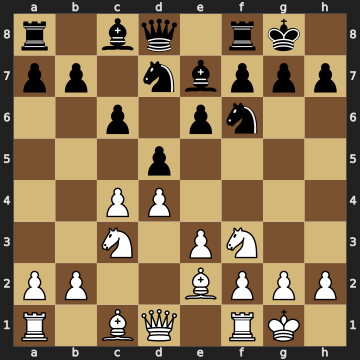
エマニュエル・ラスカー — 27年間の王者
27年間という史上最長の世界王座在位期間を誇るラスカー。単に強いだけでなく、相手の心理を読む能力に長けており、「最善手よりも相手が最も嫌がる手を指す」という独自のアプローチで知られていました。
数学者でもあり哲学者でもあったラスカーは、チェスを単なるゲームを超えた知的・哲学的な営みとして捉えていました。その柔軟な思考と心理的洞察は、現代のチェス心理学の先駆けとなりました。
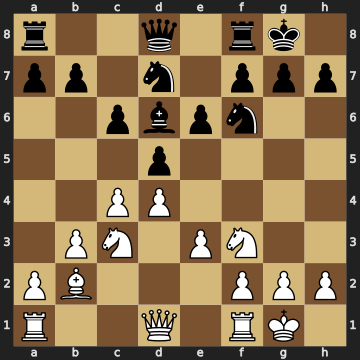
ホセ・ラウル・カパブランカ — チェスの機械
キューバ出身のカパブランカは「チェスの機械」と称されるほどの完璧さを誇りました。1914年から1924年頃まで10年以上にわたって公式戦で一度も敗北を喫せず、その間に世界チャンピオンの座を獲得しました。
特にエンドゲームの技術は史上最高とも評されており、「カパブランカのエンドゲームを学べ」は今もチェス教師が繰り返す言葉です。その直感と技術の完璧な融合は、一世紀後の現代でもチェス学習の手本であり続けています。
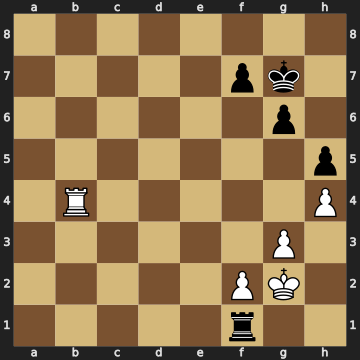
アレクサンダー・アレヒン — 終わりなき探求者
アレヒンはカパブランカを破り世界チャンピオンとなりましたが、その勝利は誰もが予想していなかった大番狂わせでした。10年以上無敗のカパブランカを6対3で下したアレヒンの準備と研究量は、チェス史上前例がないものでした。
攻撃的で複雑な手順を好み、何十手先まで読む「組み合わせ(コンビネーション)」の天才として知られていました。在職中に何度か見せた長い読みの手順は、現代のコンピュータ解析でも最善手と確認される水準に達していました。
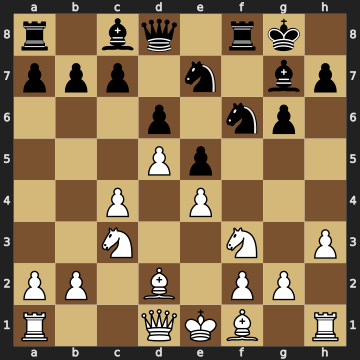
ロバート・ジェームズ・フィッシャー — 孤高の天才
アメリカのブルックリン生まれのフィッシャーは、13歳で「世紀の対局」を演じ、15歳でグランドマスターとなりました。1972年のスパスキーとの世界選手権は「冷戦の代理戦争」とも呼ばれ、世界中が固唾を呑んで見守りました。
フィッシャーのチェスは圧倒的な独自性を持っていました。どのオープニングも、どの戦術も、どのエンドゲームも、彼は自分で深く研究してから盤に臨みました。「チェスに捧げた人生」という表現が最も相応しい人物のひとりです。
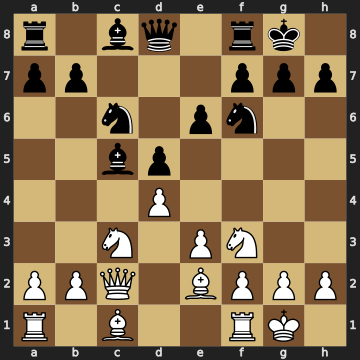
アナトリー・カルポフ — 静かなる支配者
フィッシャーの不戦勝という形で世界チャンピオンとなったカルポフですが、その後10年間にわたって圧倒的な強さで世界の頂点に君臨しました。静かで精緻なポジショナルチェスは「ボアコンストリクター(大蛇)」とも呼ばれ、気づいたときには締め付けられているという独特のプレースタイルを確立しました。
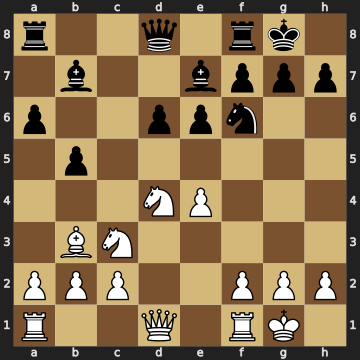
ガルリ・カスパロフ — 史上最強の棋士
22歳でカルポフを破り世界チャンピオンとなったカスパロフは、以後15年間にわたって世界最高峰の地位を維持し続けました。彼が記録した最高レーティング2851は、2011年にカールセンに抜かれるまで長らく人類の最高記録でした。
攻撃的で深い計算、そして卓越した準備量——カスパロフのチェスは芸術性と論理の融合でした。1997年にIBMのディープ・ブルーに敗れたことは世界に衝撃を与えましたが、カスパロフ自身はその後もチェスとAIの関係を語る最も重要な人物のひとりとなっています。
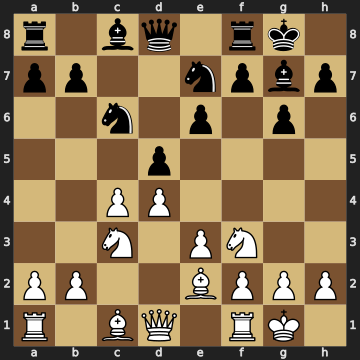
マグナス・カールセン — 現代の王者
ノルウェー出身のカールセンは、13歳でグランドマスターとなり、2013年にアナンドを破って世界チャンピオンの座を獲得しました。その後10年間世界王座に君臨し、2023年に自らのタイトル防衛を辞退するまで誰もその座を揺るがすことができませんでした。
カールセンのスタイルはシュタイニッツのポジショナルチェスとカスパロフの攻撃性を融合させたものです。派手な戦術よりも「微妙な優位を積み重ね、相手のミスを誘発する」忍耐のチェスを信条とし、それを最高レベルで体現しました。
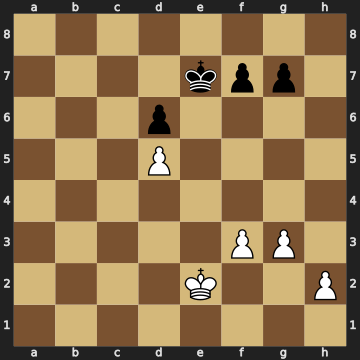
チャンピオンから学べること
世界チャンピオンたちの物語を辿ると、チェスの歴史そのものが見えてきます。攻撃の時代、ポジショナルチェスの確立、コンピュータとの闘い、そして人間とAIの新しい関係——チェスは常に時代と呼応しながら進化してきました。
初心者がチャンピオンの対局を並べることは、単なる勉強以上の価値があります。盤上に刻まれた天才の思考に触れることで、チェスの可能性の深さを肌で感じることができます。それがチェスを「生涯の学び」にする最大の理由です。

👑 Stories of the World Chess Champions
World chess champions are not simply "very good chess players." They stood at the pinnacle of their era's intellectual achievement, transforming chess itself through the power of their thinking. Since the first official World Championship in 1886, only a handful of people have ever held this title. Here we present the stories of the greatest champions who left the deepest marks on history.
Wilhelm Steinitz — Father of Modern Chess
Before Steinitz, chess was in the "Romantic era" — flashy sacrifices and brilliant attacks were the highest virtues. But Steinitz proposed a fundamentally different idea: "Chess victories come not from beautiful attacks, but from the accumulation of positional advantages."
He systematized the concept of "positional chess" and passed it down as "Steinitz's Principles." This thinking forms the foundation of modern chess, and every contemporary player stands on Steinitz's legacy.
Emanuel Lasker — The 27-Year King
Lasker holds the record for the longest World Championship reign at 27 years. More than simply strong, he had a remarkable ability to read opponents' psychology, known for playing "not the best move, but the move the opponent would find most unpleasant."
Also a mathematician and philosopher, Lasker saw chess as an intellectual and philosophical endeavor transcending mere game. His flexible thinking and psychological insight pioneered what we now call chess psychology.
José Raúl Capablanca — The Chess Machine
Cuba's Capablanca earned the nickname "The Chess Machine" for his perfection. Going over a decade without a single official loss, he captured the World Championship title during this remarkable unbeaten streak.
His endgame technique in particular is rated the greatest in history — "Study Capablanca's endgames" remains advice chess teachers repeat today. His perfect fusion of intuition and technique continues to serve as a model for chess learning a century later.
Alexander Alekhine — The Relentless Seeker
Alekhine defeated Capablanca to become World Champion in what everyone considered a massive upset. The preparation and research Alekhine brought to defeating the seemingly unbeatable Capablanca 6 to 3 was unprecedented in chess history.
Known as a genius of "combinations" — preferring complex attacking sequences calculated many dozens of moves ahead — his play was later confirmed by computer analysis to be optimal.
Robert James Fischer — The Solitary Genius
Born in Brooklyn, Fischer played "The Game of the Century" at 13 and became a grandmaster at 15. His 1972 World Championship match against Spassky was called "a proxy war of the Cold War," watched breathlessly around the world.
Fischer's chess had overwhelming originality. Every opening, every tactic, every endgame — he deeply researched each before sitting at the board. He is perhaps the person most aptly described as having "dedicated his life to chess."
Anatoly Karpov — The Silent Dominator
Karpov became World Champion by default when Fischer refused to defend his title, but he went on to dominate the chess world for ten years with overwhelming strength. His quiet, precise positional chess was called the "boa constrictor" style — opponents found themselves squeezed before they realized what was happening.
Garry Kasparov — The Greatest Player in History
Kasparov became World Champion at 22 by defeating Karpov, then maintained his position at the summit of world chess for 15 years. His peak rating of 2851 stood as the human record until Carlsen surpassed it in 2011.
Aggressive deep calculation combined with extraordinary preparation — Kasparov's chess was a fusion of artistry and logic. His 1997 loss to IBM's Deep Blue shocked the world, and he went on to become one of the most important voices discussing chess and artificial intelligence.
Magnus Carlsen — The Modern King
Norway's Carlsen became a grandmaster at 13 and captured the World Championship in 2013 by defeating Anand. For ten years he reigned at the top; no one came close to unseating him until he voluntarily chose not to defend his title in 2023.
Carlsen's style fuses Steinitz's positional chess with Kasparov's aggression. Rather than flashy tactics, his guiding principle is "accumulate subtle advantages and induce the opponent to make mistakes" — which he executed at the highest level imaginable.
What We Learn from the Champions
Tracing the stories of world champions reveals chess history itself. The era of attacks, the establishment of positional chess, the battle with computers, and the new relationship between humans and AI — chess has always evolved in step with its era.
For beginners, studying games by champions offers value beyond mere study. By encountering the thoughts of geniuses etched on the board, you feel the depth of chess's possibilities first-hand. That is the greatest reason chess becomes "a lifelong pursuit."