♟ チェスの駒——
それぞれの個性と使いこなし方
チェスには6種類の駒があります。それぞれ動き方が異なり、得意な局面・不得意な局面も違います。「どの駒がどんな場面で輝くか」を理解することが、チェス上達の根本となります。ここでは各駒の個性を深く掘り下げ、実戦での使いこなし方を解説します。

キング(King)
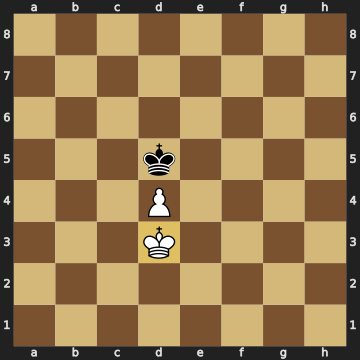
キングは1マスずつしか動けませんが、縦・横・斜めのすべての方向に移動できます。チェスの目的はキングをチェックメイトすることであり、キングを失ったらゲームは終わりです。
序盤・中盤はキャスリングでキングをコーナーに隠し、ポーンの壁で守ることが鉄則です。しかし終盤でピースが少なくなると、キングは強力な攻撃駒に変身します。終盤のキングを積極的に中央に進出させることが、多くの場合勝利への鍵となります。
クイーン(Queen)
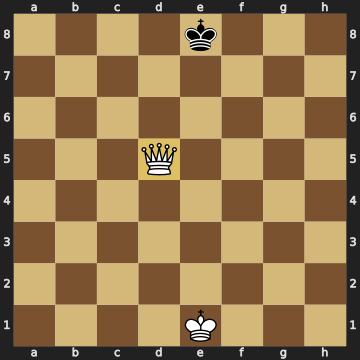
クイーンはルークとビショップを合わせた動きができる、チェスで最も強力な駒です。縦・横・斜めの任意の方向に何マスでも動けます。その圧倒的な機動力は、相手に常に脅威を与え続けます。
ただし、クイーンは序盤に前線に出すべきではありません。相手のナイトやビショップに追い回され、手数を無駄にしてしまいます。クイーンが最も輝くのは、相手の防御が崩れてきた中盤から終盤にかけてです。
ルーク(Rook)
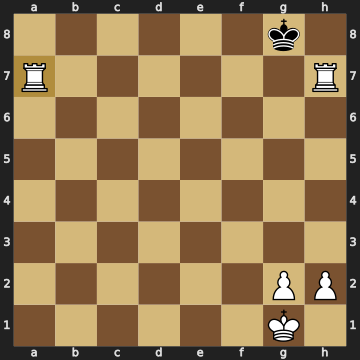
ルークは縦または横に何マスでも動ける、クイーンに次いで強力な駒です。ポーンが少なくなってオープンファイル(ポーンのない縦列)が生まれると、ルークの力は飛躍的に増します。
序盤のルークは動き回る機会が少ないですが、キャスリングによってルークを中央に向けることが重要です。また、2枚のルークを同じファイルに重ねる「バッテリー」は、ルークの最も強力な使い方のひとつです。
ビショップ(Bishop)
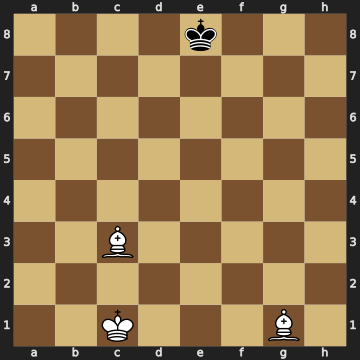
ビショップは斜め方向に何マスでも動けます。白マスのビショップは生涯白マスのみ、黒マスのビショップは生涯黒マスのみを動きます。この特性から、「悪いビショップ」(自分のポーンと同じ色のマスに閉じ込められたビショップ)という概念が生まれます。
ビショップはオープンな局面で真価を発揮します。ポーンが少なく開けた盤面では、長い対角線を通じて盤面の広い範囲を支配できます。一方、ポーンが多くクローズドな局面ではナイトの方が優れる場合が多いです。
ナイト(Knight)
ナイトはL字型(縦2マス横1マス、または縦1マス横2マス)に動き、他の駒を飛び越えることができる唯一の駒です。この独特な動き方は、他の駒では届かないマスに突然現れることを可能にし、相手に予測困難なプレッシャーを与えます。
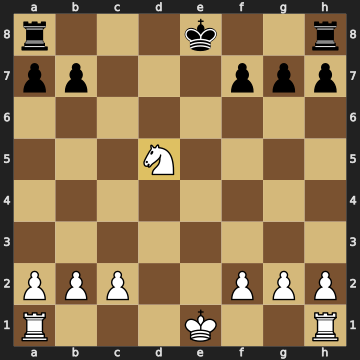
ナイトは「アウトポスト」(相手のポーンが攻撃できない安全なマス)に置かれると最強になります。特にd5やe5などの中央のアウトポストは、ナイトの理想的な拠点です。
ポーン(Pawn)
ポーンは前にしか進めず、攻撃は斜め前の1マスのみです。後退できない唯一の駒ですが、この「小さな駒」こそが局面を最も大きく左右する存在です。ポーンの配置(ポーン構造)がその局面の性質を決め、両プレイヤーの長期的な戦略を規定します。
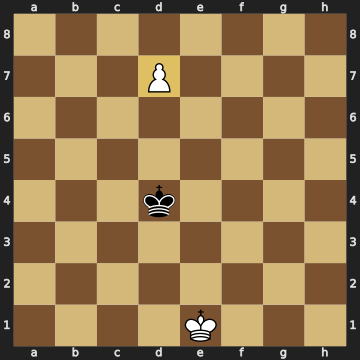
ポーンが相手陣の最後列(8段目)に到達すると、クイーン・ルーク・ビショップ・ナイトのいずれかに「プロモーション(昇格)」できます。ほとんどの場合クイーンに昇格します。この可能性こそが、ポーンが終盤で最も重要な戦力となる理由です。
駒の組み合わせで生まれる力
各駒の個性を理解した上で重要なのは、「駒の組み合わせ」です。ルーク同士の連携、ビショップとナイトの補完関係、クイーンとルークのコンビネーション——これらの組み合わせによって、個々の駒の力の合計を超えた力が生まれます。
チェスの上達とは、こうした駒の相互作用を直感的に理解できるようになることです。KitsuneChessの定跡レッスンでは、各オープニングで各駒がどのような役割を担うかを解説しています。定跡を学ぶことは、駒の使い方を学ぶことでもあります。

♟ Chess Pieces —
Their Characters and How to Use Them
Chess has six types of pieces. Each moves differently and shines in different types of positions. Understanding "which piece excels in which situation" is the foundation of chess improvement. Here we take a deep look at each piece's character and explain how to use them effectively in real games.
King
The king moves only one square at a time but can go in any direction. The goal of chess is to checkmate the opponent's king. In the opening and middlegame, the iron rule is to tuck the king safely in a corner via castling.
However, as pieces disappear in the endgame, the king transforms into a powerful attacking piece. Actively advancing the king toward the center in the endgame is often the key to victory.
Queen
The queen combines the movements of the rook and bishop. It can move any number of squares in any direction. Its overwhelming mobility makes it a constant threat to the opponent.
However, the queen should not be brought to the front lines in the opening. Chased around by knights and bishops, you waste precious moves. The queen shines brightest in the middlegame and endgame.
Rook
The rook moves any number of squares horizontally or vertically. When pawns disappear and open files appear, the rook's power grows exponentially.
Rooks have few opportunities in the opening, but it's important to direct them toward the center via castling. Doubling two rooks on the same file ("battery") is one of the most powerful uses of the rook.
Bishop
The bishop moves diagonally any number of squares. A light-squared bishop stays on light squares for its entire life; a dark-squared bishop stays on dark squares. This gives rise to the "bad bishop" concept.
Bishops show their true worth in open positions. On boards with open diagonals, a bishop can control a large portion of the board. In closed positions, knights often prove superior.
Knight
The knight moves in an L-shape and is the only piece that can jump over other pieces. This unique movement allows it to appear suddenly on squares unreachable by other pieces, creating threats the opponent struggles to predict.
Knights are strongest when placed on "outposts" — squares where they cannot be attacked by enemy pawns. Central outposts like d5 or e5 are ideal homes for a knight.
Pawn
Pawns can only move forward and attack only diagonally forward one square. They are the only piece that cannot retreat. Yet pawn structure defines the character of the position and determines the long-term strategies of both players.
When a pawn reaches the last rank (8th rank), it can promote to any piece — usually a queen. This potential is why pawns become the most critical fighting force in the endgame.
The Power Born from Piece Combinations
Understanding each piece individually is important, but how pieces work together matters just as much. Rooks cooperating on open files, the complementary relationship between bishops and knights, the queen-rook combination — these synergies create force that exceeds the sum of the individual parts.
Improving at chess means developing an intuitive understanding of these piece interactions. KitsuneChess opening lessons explain the role each piece plays in each opening system. Learning openings is simultaneously learning how to use each piece effectively.